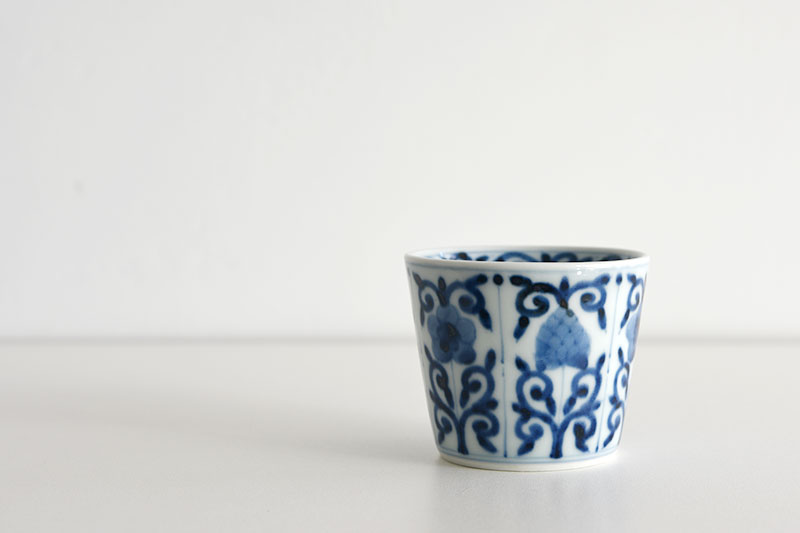
My decade long search for a Japanese Sometsuke (blue-and-white porcelain) artist came to a successful conclusion when I discovered Iwanaga Hiroshi’s work at a gallery in Tokyo in 2023. I was enamored by Iwanaga-san’s Sometsuke with the brilliant blue brushwork and fresh porcelain bodies of widely variable shapes. They reminded me of the vibrant Koimari -old Imari, named after the nearby Imari port- ceramics that were produced in the pottery town of Arita, Saga, in Northwestern Kyushu during the Edo period (1603-1868).

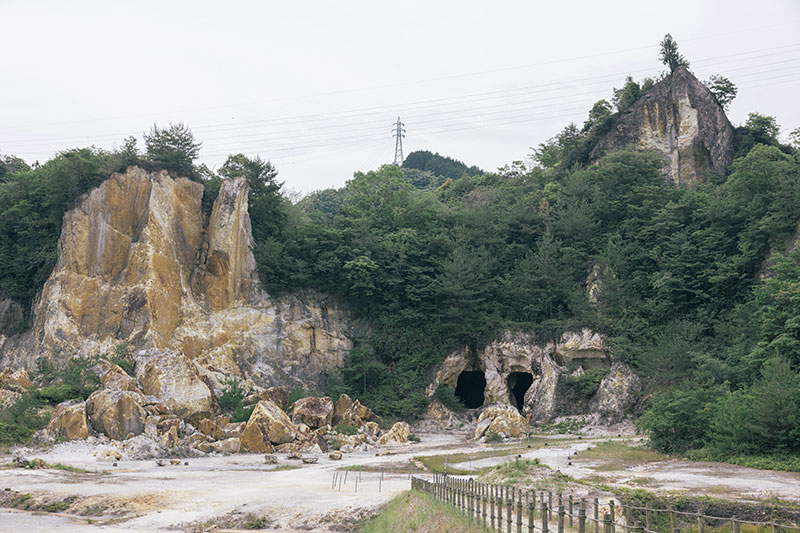
Porcelain making began in Arita in the first decade of the 17th century, after the first kaolin deposit was discovered in Izumiyama by skilled Korean potters who were brought to Japan through two invasions in the 1590s. Inspired by the popular blue-and-white ware imported from China since the Middle Ming dynasty (1368-1644) and invigorated by the kaolin discovery, the Arita potters began creating ceramics known as Imari with designs and motifs catering to Japanese tastes. These designs often followed the examples of Chinese motifs but with direct and playful expressions of fauna and flora that I think is uniquely Japanese -a quality also present in Iwanaga-san’s work.
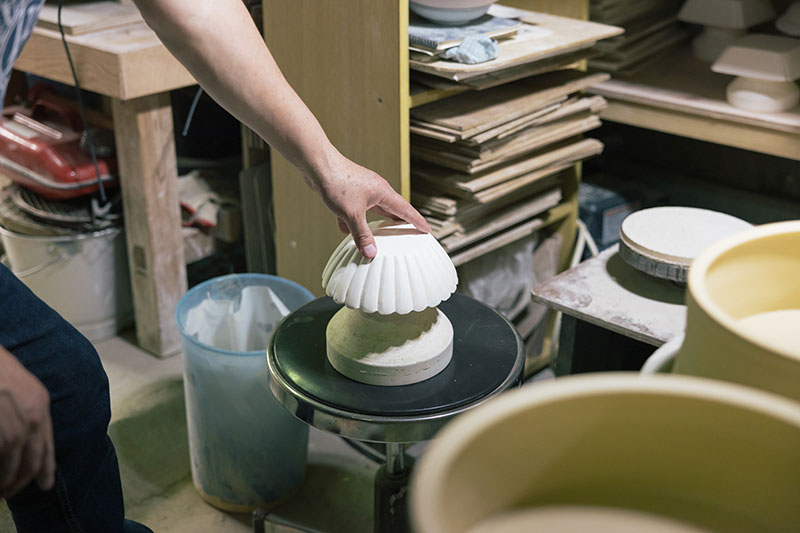
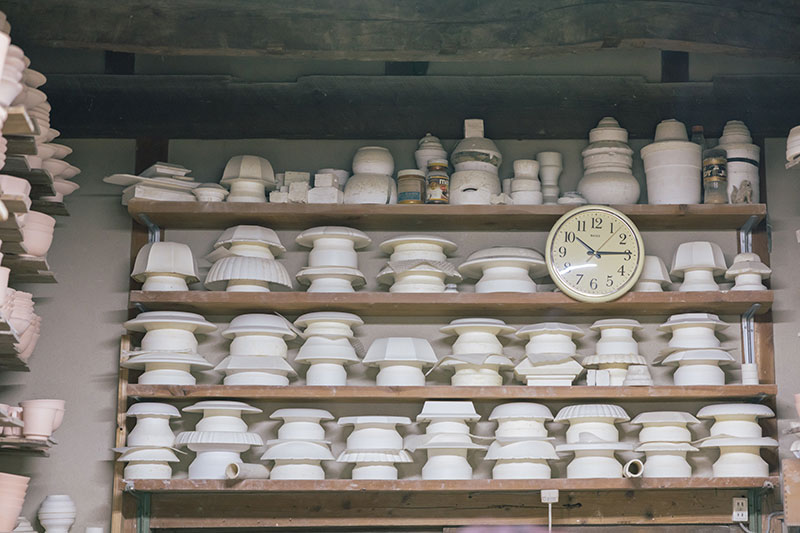
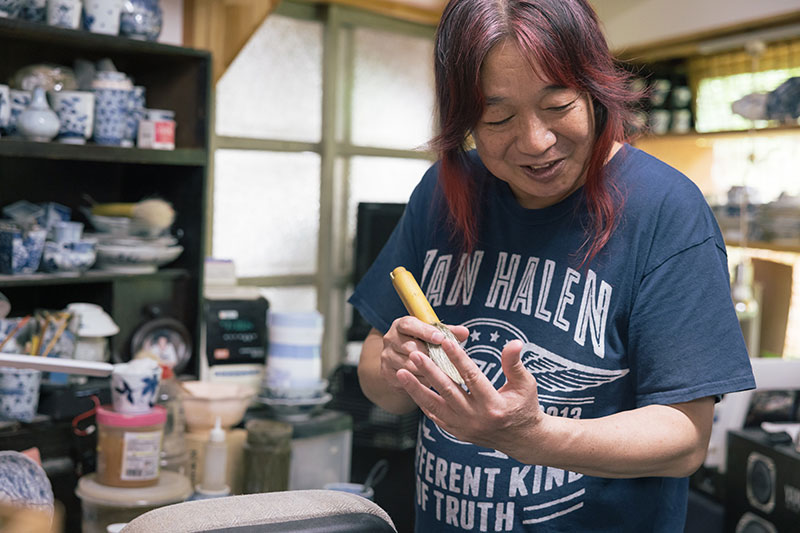
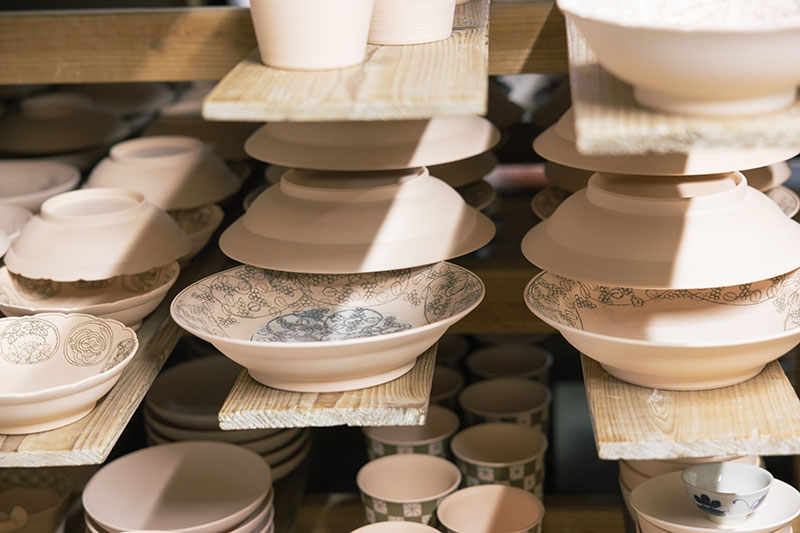
Last spring, I visited Iwanaga-san’s studio in Arita, which today has a population of approximately 19,000 people. When I arrived at the studio, Iwanaga-san, a broad-shouldered man with long red hair donning a Van Halen T-shirt (he loves rock music), cheerfully greeted me into his garage. We squeezed past his car, a well-maintained vintage Nissan 370Z, through to the studio where hundreds of pieces of greenware were drying on boards with side shelves stacked with numerous molds.
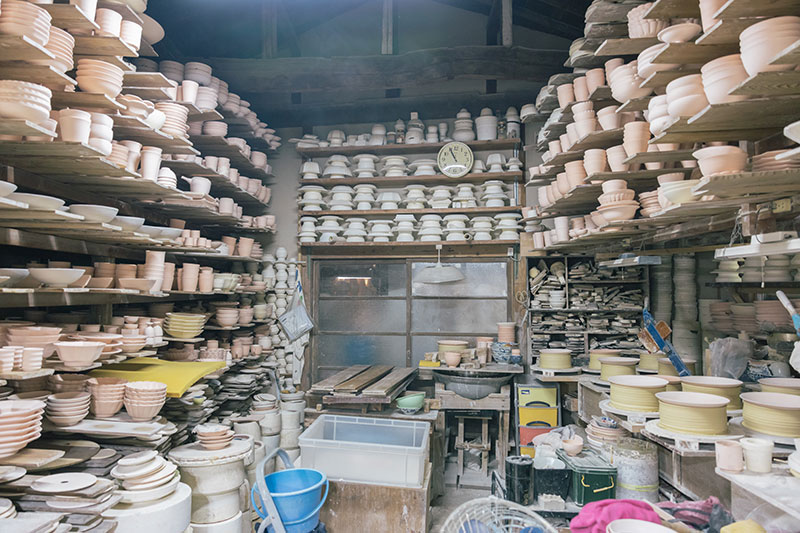
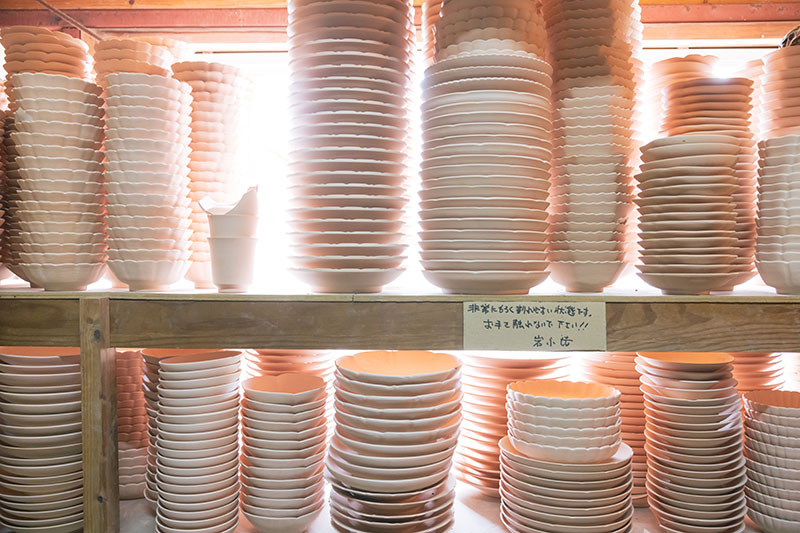
For four decades, Iwanaga-san has been throwing and molding the porcelain, drawing and painting the designs, preparing and applying the natural pine ash glaze and firing the pots all with his own hands. I was surprised at the level of output that was evident from the sheer volume of unfinished pieces stored in his studio.
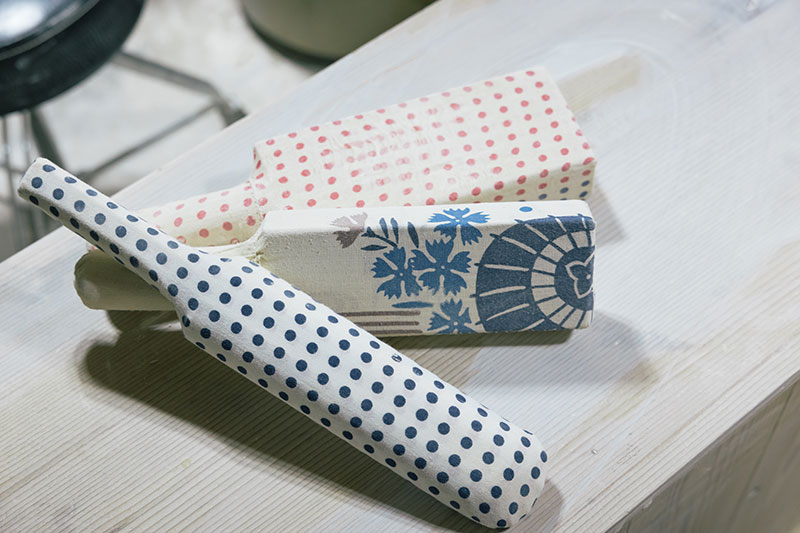
Traditionally, painted porcelain dishes in Arita have been made through a division of labor. “My father was a “soji” maker who shaped clay and prepared greenware for painters,” Iwanaga-san said. “Many of the mold making tools belonged to my father.” These days Arita’s local ceramics industry is dominated by wholesalers who make it difficult to sustain a good wage for the workers at the foothills of porcelain production, like mold and greenware makers. It is also little known outside but, in Arita, most porcelain bases are slip-cast using machines. “I don’t have anything against slip-casting,” Iwanaga-san said. “But I think inconsistencies in hand-thrown pots and varying tones of cobalt are desired ‘flavors’ of sometsuke work.”
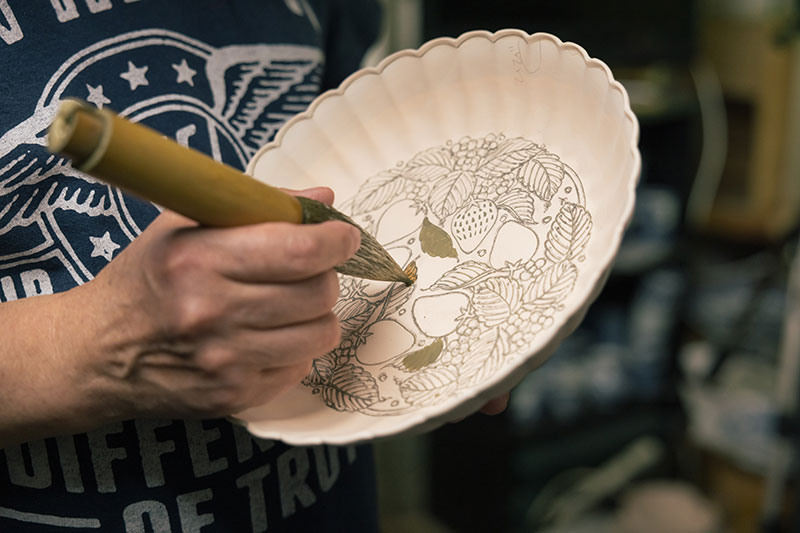
“From the beginning, I wanted to become a studio potter, so I studied both throwing and drawing,” Iwanaga-san said. He studied sumi ink drawing under Kanetake Jinen, a traditional ink drawing craftsman. “Sensei purchased the famous “Manual of the Mustard Seed Garden” for his students, and I copied the drawings from the book for many years,” Iwanaga-san fondly recalled. He also studies Koimari designs and gets inspirations from motifs on chards found at old local kilns dotted around his neighborhood.
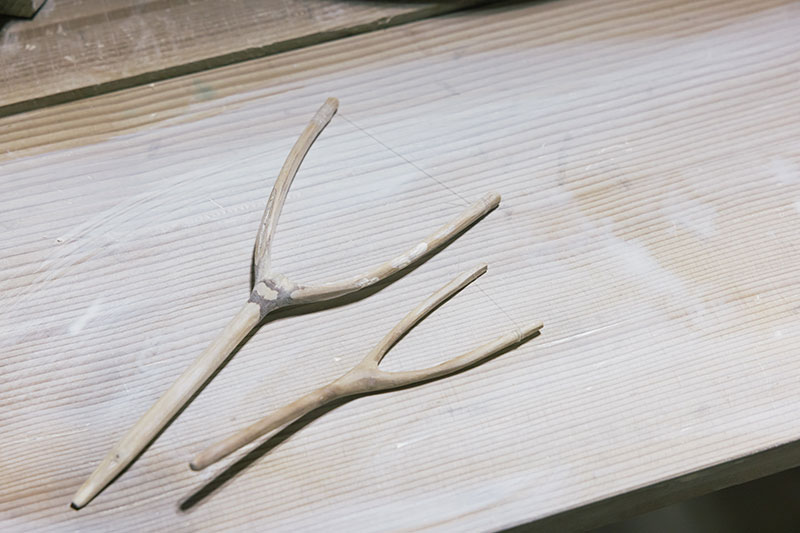
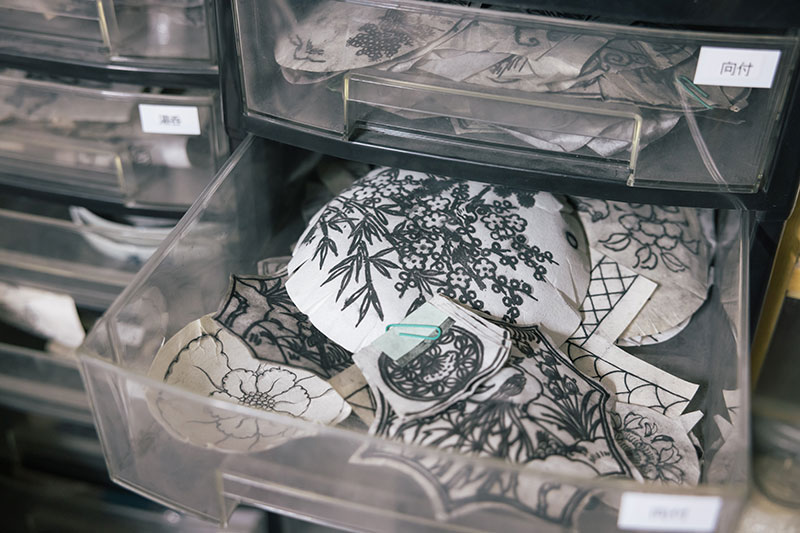
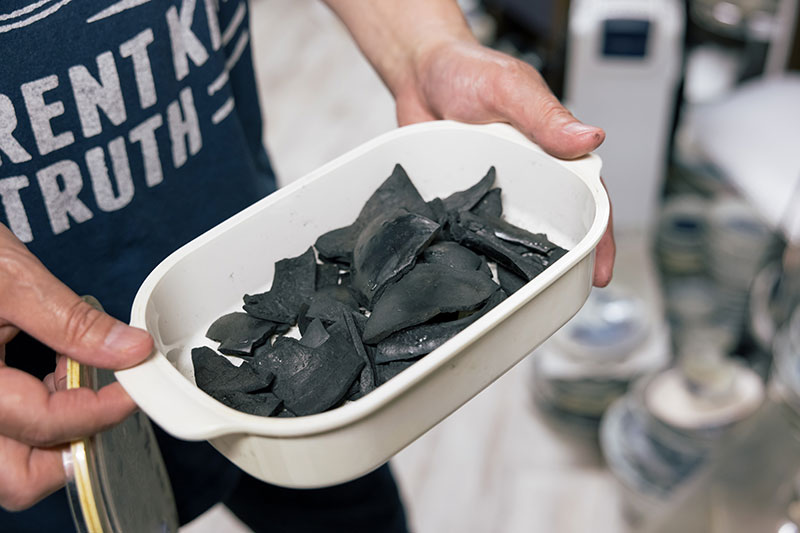
After the wheel room, Iwanaga-san took me to the painting room where he stores various outlines of his designs on paper. These outlines are transferred onto bisqueware using gourd ink that burns away in the kiln. “Several years ago, the local producer of gourd ink went out of business and I almost went out of business,” Iwanaga-san said jokingly as he showed us pieces of burned gourd. “So, I started making them myself.” These types of challenges seem to invigorate Iwanaga-san.
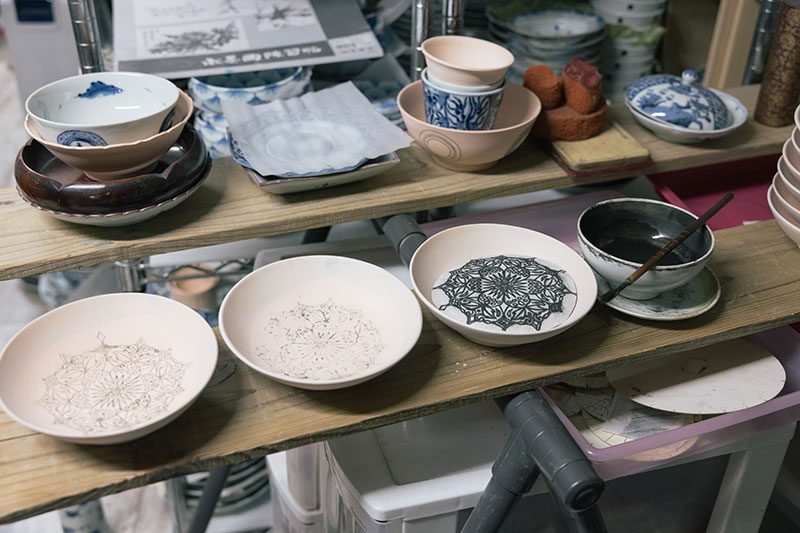
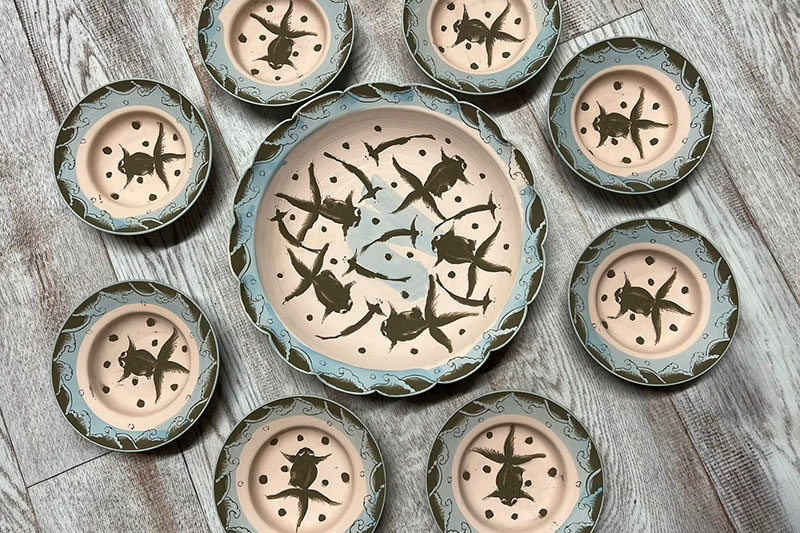
Iwanaga-san established his own Sometsuke studio in 1985 and for several years he knuckled down to pay off his family’s debt. 10 years later in 1995 he held his first successful solo exhibition in Tokyo. Since then, public recognition of his extraordinary work has grown steadily and he has regularly exhibited at well-known galleries throughout Japan. In 2008 he was selected by Yoshioka Sachio, a renowned dye artist, to create 25 Sometsuke chargers for the “Work by Hand: A Japanese Tradition” for an exhibit at the Terminal 2 arrivals concourse at Narita Airport. And recently Iwanaga-san took on non-ceramic work that involved the painting of the designs of yukata (cotton summer kimono) fabric for professional sumo wrestler Takayasu Akira.
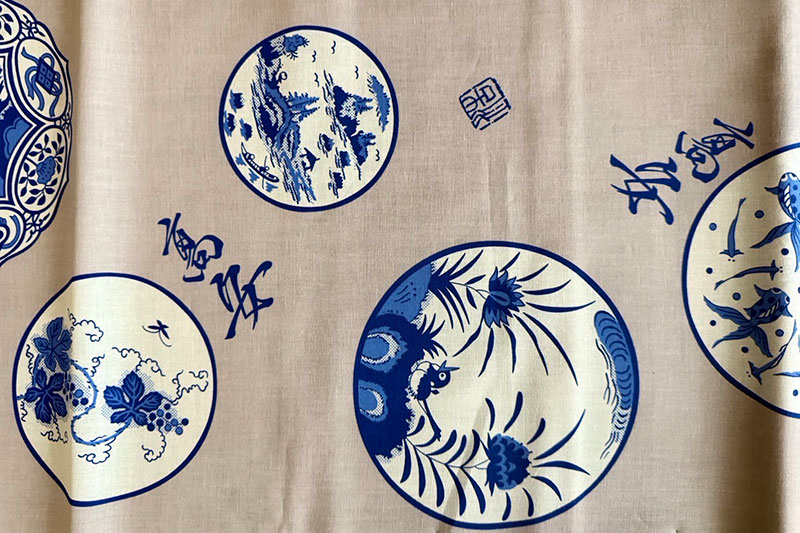
Iwanaga-san is 65 years old this year and has decided to retire from doing annual solo exhibitions in Tokyo. His elbows and neck have developed chronic pain, so he needs to work less after decades of spending too many hours on the wheel and holding a brush. As we left the studio, Iwanaga-san explained his plans to clean up his studio so that his daughter’s family could move into his house. He said he will continue to work at a slower pace and divide his time between Arita and Tokyo, where his girlfriend lives and runs a small gallery while taking care of her elderly mother.
Luckily, a slower pace for Iwanaga-san will allow a small gallery like mine to be able to continue to bring his work to the U.S. “I want to keep making good work that will be cherished by people even after I’m gone,” Iwanaga-san says.
Since the appeal of blue-and-white pottery never seems to cease, history is on his side. I hope that you find Iwanaga-san’s work as uplifting as I do just like Arita’s Imari ware traveled the world and inspired people in faraway regions a few centuries ago ✦
All photos at Iwanaga Hiroshi’s studio by Tomoko Matsubayashi